



If you’ve been wondering “where is Bonaire located?” you’re not alone. This stunning Caribbean island remains one of the region’s best-kept secrets, offering pristine diving spots, untouched natural beauty, and a peaceful escape from crowded tourist destinations. Let’s explore exactly where you’ll find this tropical gem and why its unique location makes it so special.
Bonaire’s Geographic Location: The Essentials
Where is Bonaire island located? Bonaire sits in the southern Caribbean Sea, approximately 50 miles north of Venezuela’s coast. This Dutch special municipality forms part of the ABC Islands (Aruba, Bonaire, and Curaçao), positioned strategically outside the hurricane belt at coordinates 12°9′N 68°16′W.
The island of Bonaire is located just 20 miles east of Curaçao and about 86 miles southeast of Aruba. Its proximity to the South American mainland gives it a unique climate and ecosystem that differs significantly from other Caribbean destinations.
Bonaire’s Political Status and Regional Context
Dutch Caribbean Territory
Bonaire operates as a special municipality of the Netherlands, meaning it’s not technically part of the European Union but maintains strong ties to Dutch governance. This status, established in 2010, makes Bonaire part of the Kingdom of the Netherlands alongside its sister islands Saba and Sint Eustatius.
The island’s political arrangement affects everything from currency (US Dollar) to official languages (Dutch and Papiamentu), creating a unique blend of Caribbean culture with European administrative efficiency.
Bonaire’s Neighbors: The ABC Islands Connection
Proximity to Sister Islands
Understanding where Bonaire is located means recognizing its relationship with neighboring islands:
- Curaçao: 20 miles west, featuring the region’s largest airport and commercial hub
- Aruba: 86 miles northwest, known for its white sand beaches and tourism infrastructure
- Klein Bonaire: A small uninhabited islet just off Bonaire’s west coast, perfect for day trips
This island cluster shares similar geological origins, formed by coral reefs and limestone deposits over millions of years.
Physical Geography and Landscape Features
Topographical Characteristics
Bonaire stretches approximately 24 miles long and 3-7 miles wide, covering 111 square miles of diverse terrain. The island’s landscape includes:
Northern Region: Hilly terrain reaching 784 feet at Mount Brandaris, covered in cacti and thorny vegetation typical of arid Caribbean environments.
Central Area: Home to Kralendijk, the capital city, and the main population center where most visitors first experience Bonaire’s charm.
Southern Peninsula: Features pink salt flats, flamingo sanctuaries, and some of the island’s most photographed landmarks.
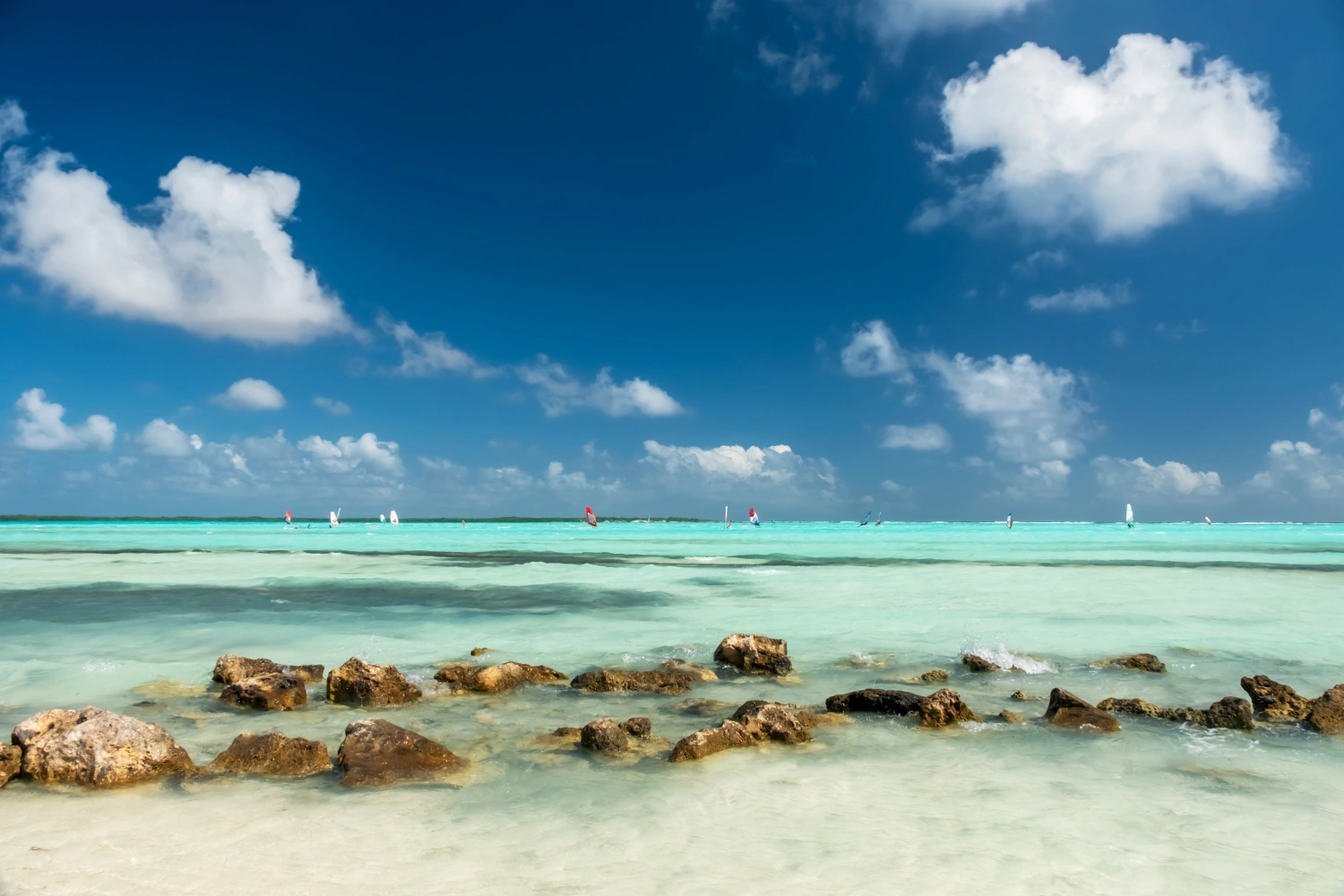
The coral limestone foundation creates the perfect conditions for world-class diving and snorkeling, with fringing reefs surrounding nearly the entire coastline.
Climate and Weather Patterns
Why Location Matters for Weather
Bonaire’s position outside the traditional hurricane belt means it enjoys remarkably stable weather year-round. The island experiences:
- Average temperatures: 78-88°F throughout the year
- Trade winds: Consistent easterly breezes that moderate temperatures
- Rainfall: Minimal precipitation, mostly between October and January
- Hurricane risk: Extremely low due to southern Caribbean location
This climate consistency makes Bonaire an ideal destination regardless of when you visit.
Getting to Bonaire: Transportation and Access
Flight Connections and Regional Hubs
Bonaire’s location requires most international visitors to connect through:
- Amsterdam (KLM): Direct flights available
- Miami: Multiple Caribbean airline connections
- Curaçao: Regional hub with frequent inter-island flights
- Aruba: Alternative connection point for North American travelers
The Flamingo International Airport (BON) handles all commercial traffic and provides easy access to the island’s main attractions.
Cultural and Historical Context
Indigenous Heritage and Colonial Influence
Bonaire’s location made it strategically important throughout Caribbean history. The Caquetío people originally inhabited the island before Spanish colonization in the early 1500s. Dutch influence began in the 1630s, establishing the cultural foundation that persists today.
The island’s position facilitated salt production, which became its primary economic driver for centuries. Today, you can still see the colorful slave huts and salt pyramids that tell this historical story.
Marine Environment and Diving Paradise
Underwater Geography
Bonaire’s location creates exceptional marine biodiversity. The island sits on a underwater plateau, surrounded by steep drop-offs that support both shallow reef systems and deep-water marine life. This positioning makes it:
- Home to over 470 fish species
- A sanctuary for sea turtles and rays
- One of the world’s top shore diving destinations
- A marine protected area since 1979
Frequently Asked Questions
Q: Is Bonaire part of the Netherlands?
A: Yes, Bonaire is a special municipality of the Netherlands, though it’s located in the Caribbean rather than Europe.
Q: How far is Bonaire from Venezuela?
A: Bonaire sits approximately 50 miles north of Venezuela’s coastline, making it one of the closest Caribbean islands to South America.
Q: Can you island-hop from Bonaire to other Caribbean destinations?
A: Yes, regular flights connect Bonaire to Curaçao and Aruba, with additional connections available to other Caribbean islands.
Q: What’s the time zone in Bonaire?
A: Bonaire operates on Atlantic Standard Time (AST), four hours behind GMT, and doesn’t observe daylight saving time.
Q: Is Bonaire safe for tourists?
A: Bonaire maintains one of the lowest crime rates in the Caribbean, partly due to its small population and effective Dutch-influenced governance.
Planning Your Visit to Bonaire
Now that you know exactly where Bonaire is located, you can appreciate why this island offers such a unique Caribbean experience. Its position outside major cruise ship routes keeps it relatively uncrowded, while its proximity to South America provides distinctive flora, fauna, and cultural influences you won’t find elsewhere in the Caribbean.
Whether you’re planning a diving expedition, seeking a peaceful retreat, or wanting to explore a different side of Caribbean culture, Bonaire’s strategic location makes it an ideal destination for discerning travelers seeking authenticity over commercialization.